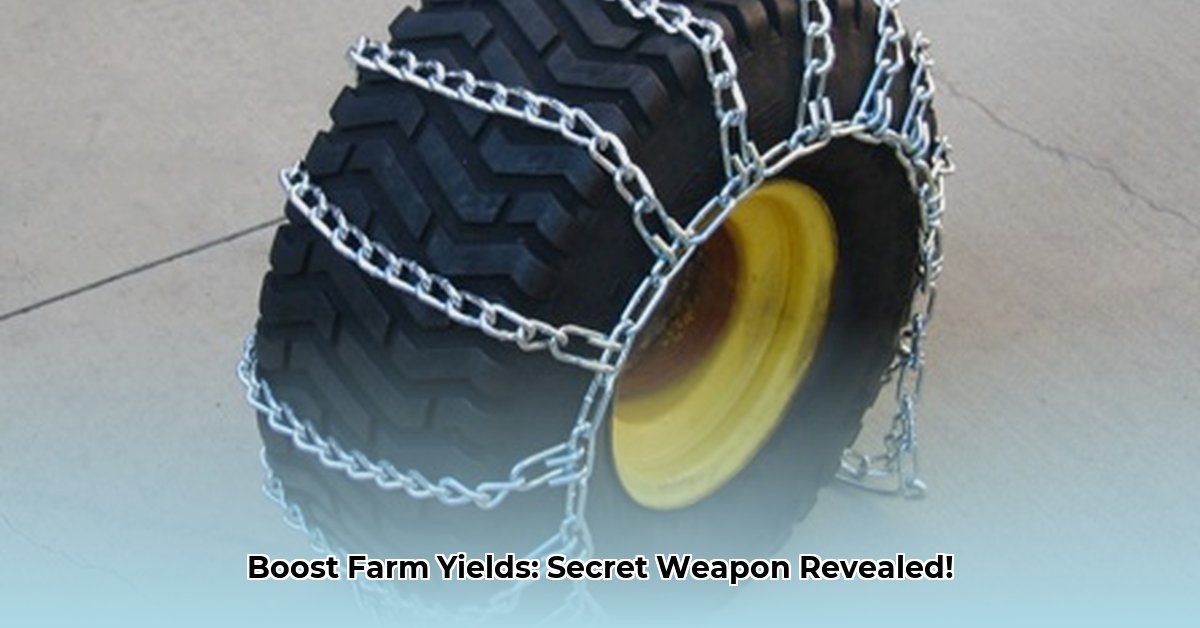
John Deere Tractor Snow Chains: Optimizing Winter Farming for Sustainability
Winter's harsh conditions can significantly hinder agricultural operations. Snow and ice create treacherous driving conditions, potentially causing delays and impacting profitability. John Deere tractor snow chains provide enhanced traction, enabling continued productivity even in challenging winter landscapes. However, their use necessitates a careful consideration of both immediate gains and long-term sustainability. This guide explores the benefits and drawbacks of using John Deere snow chains, offering actionable strategies for maximizing their effectiveness while minimizing their environmental impact. For more options, check out snow removal solutions.
Enhanced Traction and Fuel Efficiency: The Benefits of Snow Chains
The primary advantage of snow chains is the significant improvement in traction. This enhanced grip allows tractors to navigate snowy and icy fields more safely and efficiently, reducing wheel slippage. Reduced slippage directly translates to lower fuel consumption, a critical factor in managing farming costs. Dr. Anya Sharma, Agricultural Engineer at Purdue University, notes, "Studies show that reduced wheel slippage due to snow chains can lead to fuel savings of up to 15% in certain conditions, depending on terrain and chain type." This improved efficiency also means quicker completion of field tasks, reducing the time equipment spends impacting the soil.
Environmental Impact: Weighing the Trade-offs
While snow chains offer substantial benefits, their use carries environmental consequences. The increased friction between chains and the ground inevitably leads to accelerated tire wear, increasing the demand for tire production and disposal—contributing to landfill waste. Furthermore, while chains mitigate slippage-induced soil damage, improper usage or excessive pressure can lead to soil compaction. This compaction reduces water infiltration, impacting drainage, aeration, and overall soil health, ultimately influencing crop yields and long-term soil sustainability. Professor David Miller, Soil Scientist at the University of Minnesota, explains, "Soil compaction reduces porosity, restricting root growth and nutrient uptake, leading to diminished crop yields over time."
Sustainable Practices: Balancing Productivity and Environmental Stewardship
The key to successfully utilizing snow chains lies in adopting sustainable practices that minimize their negative environmental impact. This involves a strategic approach combining short-term actions with long-term commitments. How can we balance the need for efficient winter operations with the responsibility of protecting our environment?
1. Strategic Implementation: Use snow chains only when absolutely necessary. Assess ground conditions; avoid chains on relatively firm surfaces.
2. Meticulous Installation: Adhere strictly to John Deere's installation guidelines. Improper installation accelerates wear and tear and increases the risk of tire damage.
3. Regular Maintenance and Inspection: Regularly inspect chains for signs of wear or damage. Timely replacement of worn components extends the chains' lifespan and reduces waste.
4. Optimized Tire Pressure: Maintain proper tire inflation according to manufacturer recommendations. Appropriate inflation minimizes soil compaction and maximizes tire life.
5. Exploring Alternative Technologies: Investigate alternative traction solutions, such as chains with less aggressive designs or specialized low-impact tires. This is an area of ongoing research and development.
6. Responsible Disposal: Dispose of worn-out chains responsibly, adhering to local recycling regulations whenever possible.
A Long-Term Perspective: Investing in Soil Health
Sustainable agriculture demands a long-term vision that transcends immediate productivity. It requires a holistic approach that encompasses soil health, operational efficiency, and environmental impact. For farmers, the decision to utilize snow chains necessitates a comprehensive cost-benefit analysis that extends beyond short-term gains. Are the immediate benefits outweighed by the potential long-term environmental consequences?
Collaborative Solutions: A Multi-Stakeholder Approach
Sustainable utilization of snow chains demands a collaborative effort involving various stakeholders:
- Manufacturers: Develop chains from more sustainable materials and with improved designs that minimize soil compaction.
- Researchers: Conduct studies to quantify the precise environmental impact of different chain designs and alternative traction methods.
- Policymakers: Implement policies that incentivize the development and adoption of environmentally friendly traction solutions.
The ultimate goal is to achieve optimal traction without compromising the valuable resource that is our soil. John Deere tractor snow chains can be a crucial tool in winter farming practices, but their implementation must be guided by a firm commitment to responsible and sustainable agriculture.
Minimizing Soil Compaction: Actionable Strategies
Key Takeaways:
- Soil compaction significantly reduces water absorption, hinders root development, and diminishes crop yields.
- Tire pressure management is a critical short-term strategy for mitigating compaction.
- Implementing Controlled Traffic Farming (CTF) is a long-term solution for significantly reducing compaction across fields.
Mitigating Compaction: Practical Steps
Tire Pressure Management: Regularly monitor and adjust tire pressure based on soil conditions and operational requirements. Slightly under-inflating (within safe operating limits) greatly diminishes ground pressure.
Controlled Traffic Farming (CTF): Establish designated traffic lanes to minimize repeated driving over the same areas. This approach significantly reduces compaction while still allowing efficient field operations.
Advanced Tire Technology: Upgrade to high-flexion (IF and VF) tires for better load-bearing capabilities at lower pressures. This maximizes productivity and minimizes compaction.
Appropriate Equipment Selection: Choose the most appropriate equipment for the task at hand. Using lighter machinery whenever possible reduces soil pressure.
Short-Term and Long-Term Actionable Steps: A Stakeholder-Based Approach
| Stakeholder | Short-Term Actions (0-1 year) | Long-Term Actions (3-5 years) |
|---|---|---|
| Farmers | Regular tire pressure checks; Utilize lighter machinery when feasible; | Implement CTF; Invest in IF/VF tires; Integrate GPS-guided precision farming technologies. |
| Manufacturers | Develop improved tire pressure monitoring systems (TPMS); | Design lighter, more efficient machinery; Focus on optimized tire footprint design. |
| Researchers | Investigate optimal tire pressure across varying soil types; | Develop predictive models for compaction; Advance soil recovery techniques. |
By adopting these strategies, farmers can significantly reduce the negative impacts of snow chains on soil health, ensuring long-term sustainability and productivity. A collective commitment to sustainable practices ensures a healthier future for agriculture and the environment.